In recent years, the question "can laser cutting replace traditional die cutting" has gained traction in manufacturing discussions. Reports indicate that the laser cutting market is projected to reach $5.8 billion by 2026, driven by innovations and increased efficiency. Traditional die cutting, while reliable, involves longer setup times and higher material waste. Companies are seeking solutions that enhance productivity and reduce costs.
Laser cutting technology offers precision and flexibility that traditional methods sometimes lack. It can cut through various materials with intricate designs, ideal for industries like automotive and aerospace. However, it is crucial to consider the initial investment costs of laser systems. Not every company may be ready to embrace this change as they assess their unique production needs.
While laser cutting provides significant advantages, it is not a catch-all solution. Some applications still benefit from die cutting methods, especially for high-volume runs. Thoughtful evaluation is needed to understand when one technology outweighs the other. As 2026 approaches, industries must explore whether laser cutting truly complements or replaces traditional die cutting processes.
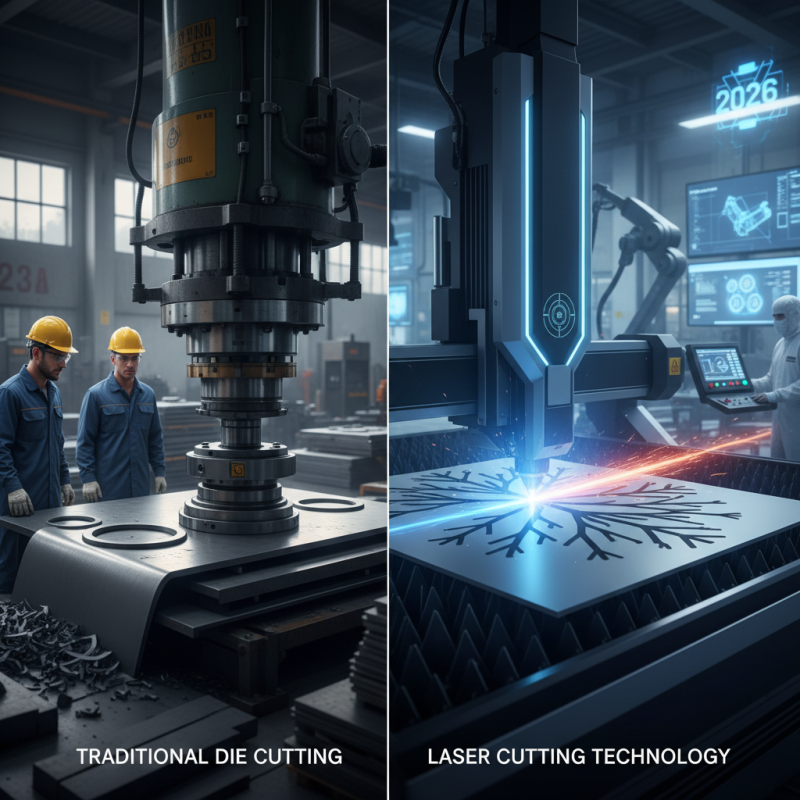
Traditional die cutting has long been a staple in various industries, including packaging, textiles, and automotive. This method employs sharp dies to cut materials into precise shapes. According to a 2023 industry report, the die cutting market is projected to reach $10 billion by 2026. This figure reflects the consistent demand for high-quality, custom shapes in manufacturing.
Applications of die cutting range widely. In packaging, it ensures that boxes and labels fit perfectly. In textiles, companies rely on it for cutting patterns. A survey indicated that nearly 70% of manufacturers cite precision as a key benefit of traditional die cutting. However, this method is not without challenges. It can be time-consuming, and the cost of die maintenance can add up. Additionally, customization options are often limited by the manufacturing process.
As the industry evolves, there are ongoing discussions about the viability of laser cutting as a replacement. Laser cutting offers benefits like increased flexibility and reduced waste. Yet, issues such as slower cutting speeds and higher initial costs could hinder widespread adoption. The debate between these methods will likely shape the future of cutting technologies in the coming years.
| Aspect | Traditional Die Cutting | Laser Cutting |
|---|---|---|
| Setup Time | Higher; requires die creation | Lower; no die needed |
| Material Flexibility | Limited to specific materials | Broad range of materials |
| Production Speed | Fast for high volumes | Faster for short runs |
| Cost Efficiency | Cost-effective for large batches | Higher initial cost; better for small quantities |
| Precision | Good but may vary | Very high precision |
| Waste Generation | Higher waste due to die shaping | Lower waste; more accurate cutting |
| Applications | Packaging, automotive parts | Aerospace, arts and crafts |
| Lead Time | Longer due to die setup | Shorter, quicker turnarounds |
: Traditional die cutting uses sharp dies to cut materials into precise shapes. It's common in many industries.
Die cutting is vital in packaging, textiles, and automotive sectors. Each industry benefits from precise cutting capabilities.
The die cutting market is projected to reach $10 billion by 2026. This indicates steady growth and demand.
Precision is a key benefit. About 70% of manufacturers value accuracy in their cutting processes significantly.
Traditional die cutting can be time-consuming, and maintenance costs may surge. Customization options are often limited as well.
Laser cutting offers increased flexibility and precision, which can improve product quality. It reduces waste during the cutting process.
Higher setup costs and the need for trained operators may hinder laser cutting's adoption. These factors require careful consideration.
Laser cutting can shorten production times, leading to quicker market entry. This efficiency is a significant attracting factor.
Laser cutting is versatile, able to process metals, plastics, and more. This flexibility meets diverse market demands.
Skilled operators are crucial for efficient implementation. Finding trained personnel remains a challenge for many companies.
The article explores the question, "can laser cutting replace traditional die cutting" by examining the strengths and limitations of both methods. It begins with an overview of traditional die cutting, detailing its widespread applications and long-standing presence in manufacturing. The discussion then shifts to the advancements in laser cutting technology, highlighting its increased precision, flexibility, and efficiency in various industries.
A comparative analysis follows, weighing the benefits of laser cutting against traditional die cutting, particularly in terms of setup time and material waste. Factors influencing the potential shift towards laser cutting by 2026 are also considered, such as cost-effectiveness and evolving industry needs. However, the article concludes by addressing the challenges and limitations associated with adopting laser cutting, suggesting that while it may not completely replace traditional die cutting, it will certainly complement and reshape the landscape of cutting technologies in the near future.

 CXO Laser